How to Calculate the Cost of Missed Inquiries and Repetitive Replies
Before you buy another tool or add another shift, find out where your customer conversations are costing you time and sales.
How do you calculate the cost of missed inquiries?
The cost of missed inquiries has two parts you can measure separately: the staff time spent on repeat questions and the potential value of buying inquiries that never got a useful reply. Take two weeks of website chat, email or social messages and sort them before reaching for a calculator.
I would start with one channel. Pull up the last two weeks of conversations and mark two groups:
- Repeat questions. Somebody had to type or look up an answer that could have been standardized.
- Missed buying inquiries. Somebody asked about buying, booking or getting a quote, and the conversation never got the answer or next step they needed.
A message can fall into both groups. Count the time only if someone actually spent it, and count the sales opportunity once per conversation.
A study of 5,179 support agents found that AI assistance increased issues resolved per hour by 14% on average in the setting studied. Use your own timing data for a small-business estimate because the study measured an agent-assist system. Brynjolfsson, Li and Raymond, NBER, 2023
What do repeat replies cost?
Multiply the number of repeat questions by the average time to handle one. Include the time to check a policy or ask a colleague. Divide by 60 if you're timing in minutes, then multiply by the hourly cost of staff time.
Suppose a team answers 120 repeat questions in two weeks and each takes about three minutes. That's six hours. At $25 an hour, the time cost is $150 for that period. Treat those hours as time you could put back into fulfillment, complex requests or sales follow-up. They become cash savings only if your actual labor spend goes down.
How much could missed buying inquiries be worth?
Use your close rate on similar inquiries that did receive a reply. If 20 buying inquiries were missed, comparable inquiries usually close at 15%, and the average order brings in $80, the model suggests about $240 in potential order revenue. If you want to estimate contribution, use the average amount left after variable costs instead of the $80 order value.
These figures are illustrative. Try a low and high close rate and keep the estimate separate from actual sales. If you don't know your close rate yet, report the number of missed buying inquiries and start tracking what happens to the next batch.
Which customer conversation should you fix first?
Picture a small home-goods shop whose team keeps answering delivery questions while packing orders. During the audit, the owner discovers there's a clear delivery policy for most orders and a recurring exception for oversized items. The first change could be to give CatchGrow the approved answer for standard deliveries and route oversized orders to someone who can check. Two weeks later, the owner can compare staff time and see whether buying inquiries are getting a useful next step.
Pick the one question that takes the most time or strands the most buyers. Give it an approved answer and assign someone to handle the exceptions.
Keep reading
- Set up a useful reply for buyers who write after closing
- Find which buying questions hold up orders
- Test the first change in a small AI pilot
FAQ
What counts as a missed sales inquiry?
Count a conversation when the customer shows buying intent and leaves without the answer or next step that would let them proceed. A slow reply can still be useful if the customer is in time to act on it.
How much history do I need for the audit?
Two weeks is a practical starting point if you have enough conversations. Use a longer period at low volume and compare busy periods with similar weeks.
Should I add estimated lost revenue to labor cost?
Report them separately. One is a sales opportunity estimate and the other is the value of staff time. Combining them can make the case for a change look more certain than it is.
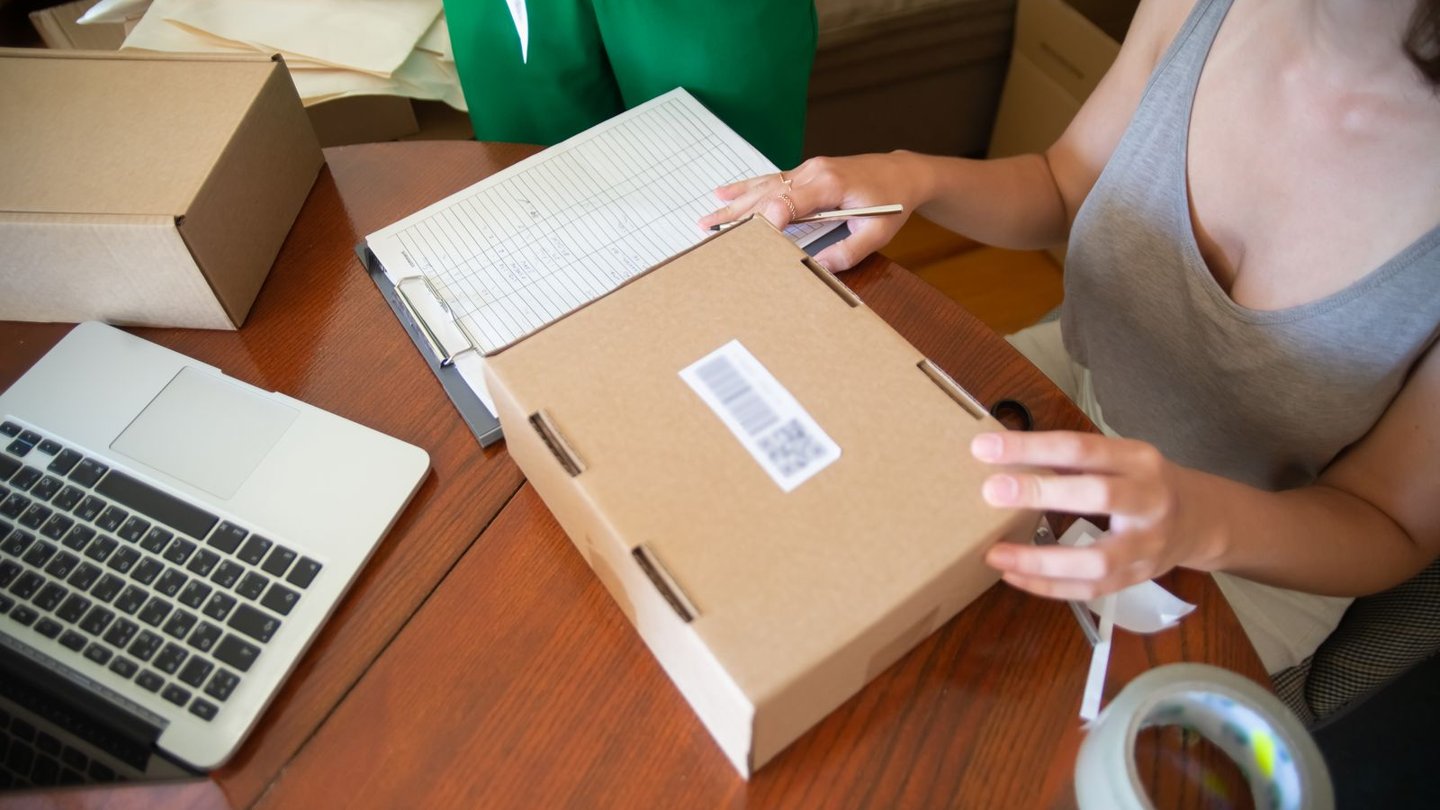
Photo by Kampus Production via Pexels.